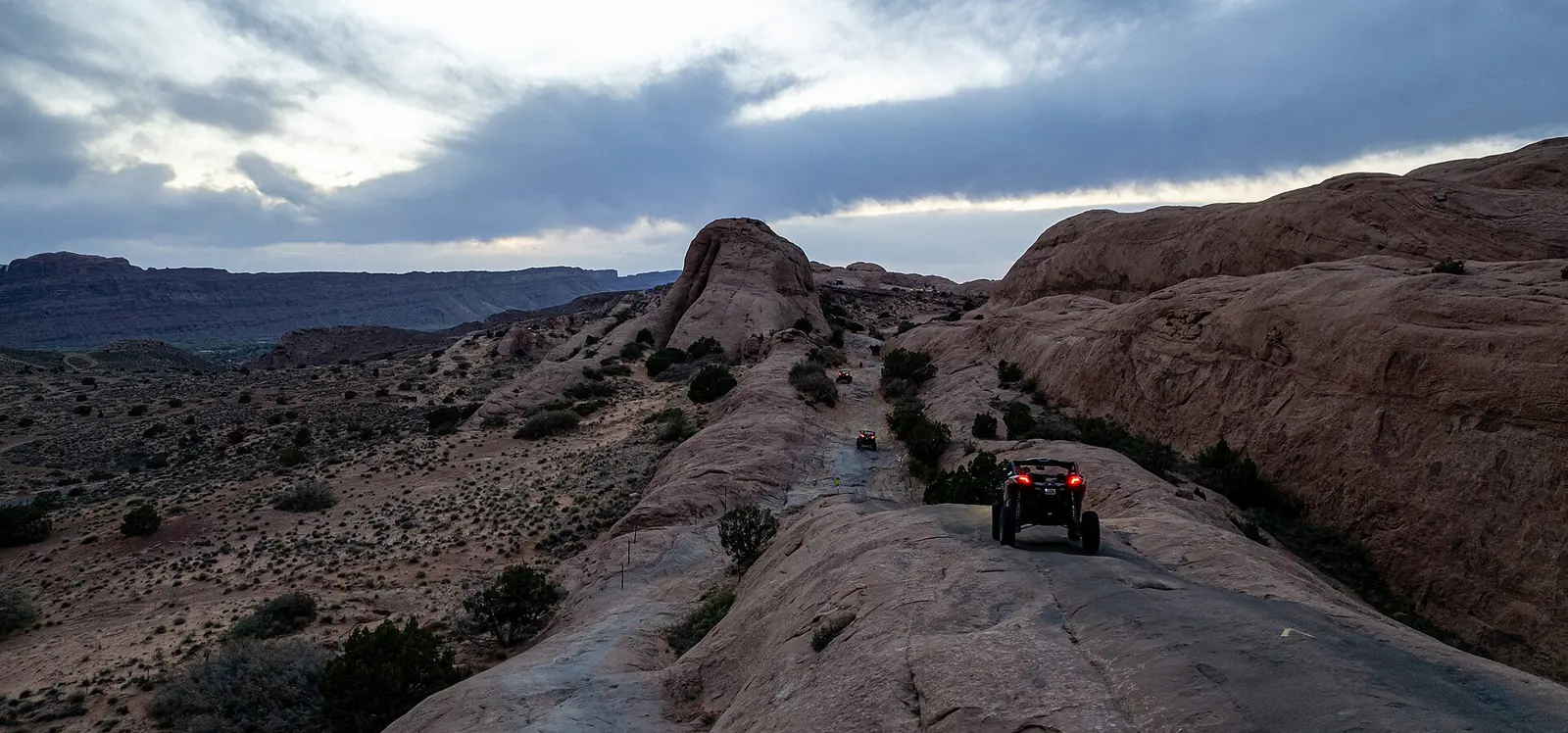
Glade Run Recreation Area
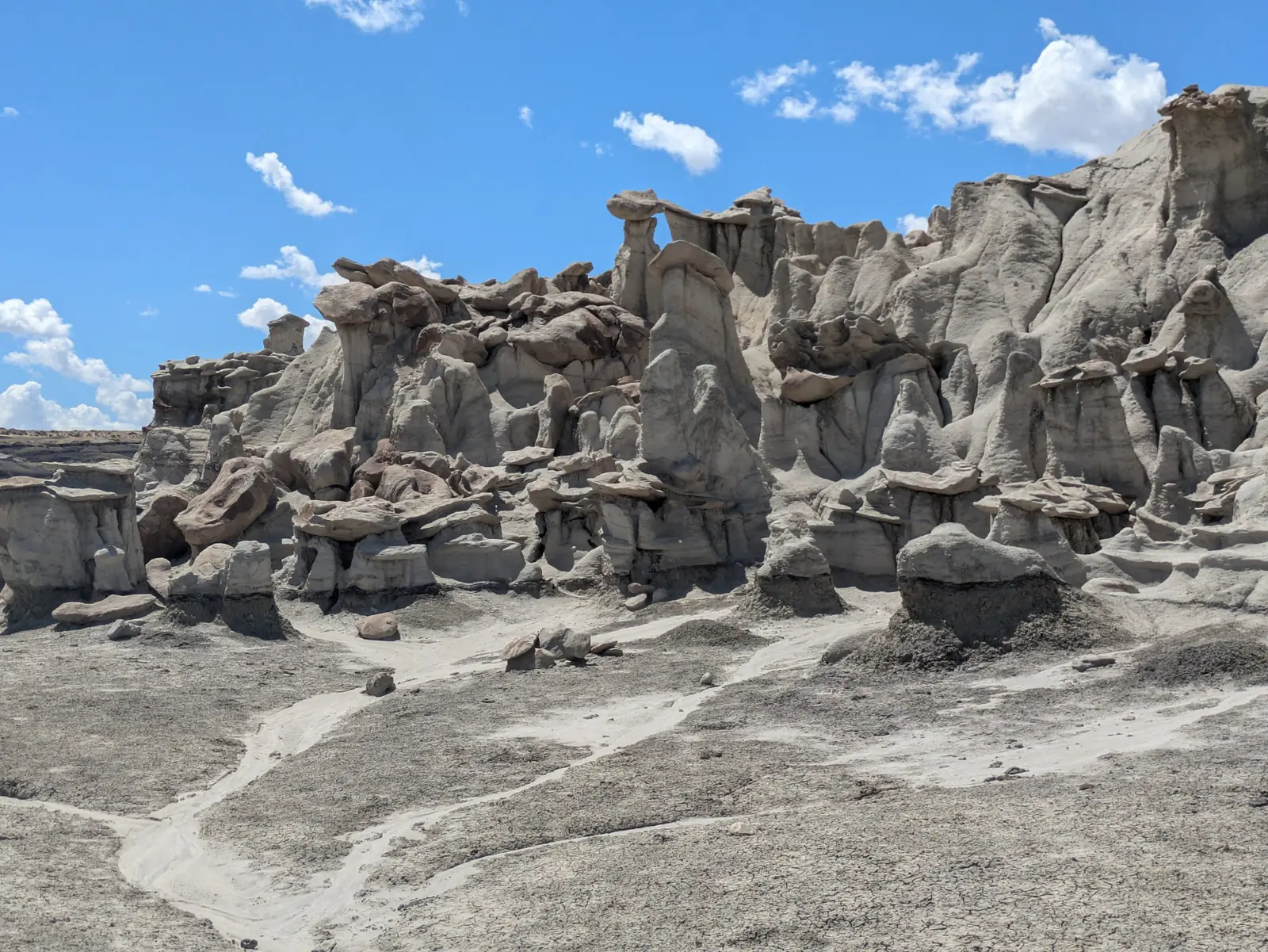
Glade Run is the big one, and it starts right at the edge of town. The Bureau of Land Management runs it as a recreation area of sandy arroyos, slickrock and rolling hills dotted with sagebrush, junipers and pinyon pines. Riders come for off-highway vehicle trails and rock crawling. Mountain bikers, hikers and horse riders use it too.
The area has two zones. Most of it, the northern part, is a limited zone where you must stay on marked trails. A smaller open area at the south end is where Chokecherry Canyon and the Brown Springs OHV Area are. The marked trails in the limited zone are shared by motorized trail bikes and mountain bikes.
There are no fees. Gas, food and water are all back in Farmington, so fill up in town before you go.
Where to start
The BLM's simplest route from town is Piñon Hills Boulevard to Glade Road (CR-1980), then north to the Glade entrance. The Glade Run OHV Area lot there has a vault toilet, a trail information kiosk and a side lot for skills practice. It is also the start of the Calle Norte Bike Park, with bike repair stations. There is no drinking water.
Farther north on Glade Road is the Brown Springs OHV Area. It was built by the BLM with state and local partners, and it has an adult OHV training area, a small riding area for young kids, a skills trail, picnic tables and vault toilets. The BLM also lists entry points from College Boulevard, from Flora Vista and from NM-574 on the north side.
Mountain biking
Not everything here has a motor. The Calle Norte Bike Park and the marked trails of the northern zone make Glade Run a popular mountain bike spot. Bikes and motorized trail bikes share some trails, so ride where you can see ahead and listen for engines.
Chokecherry Canyon rock crawling
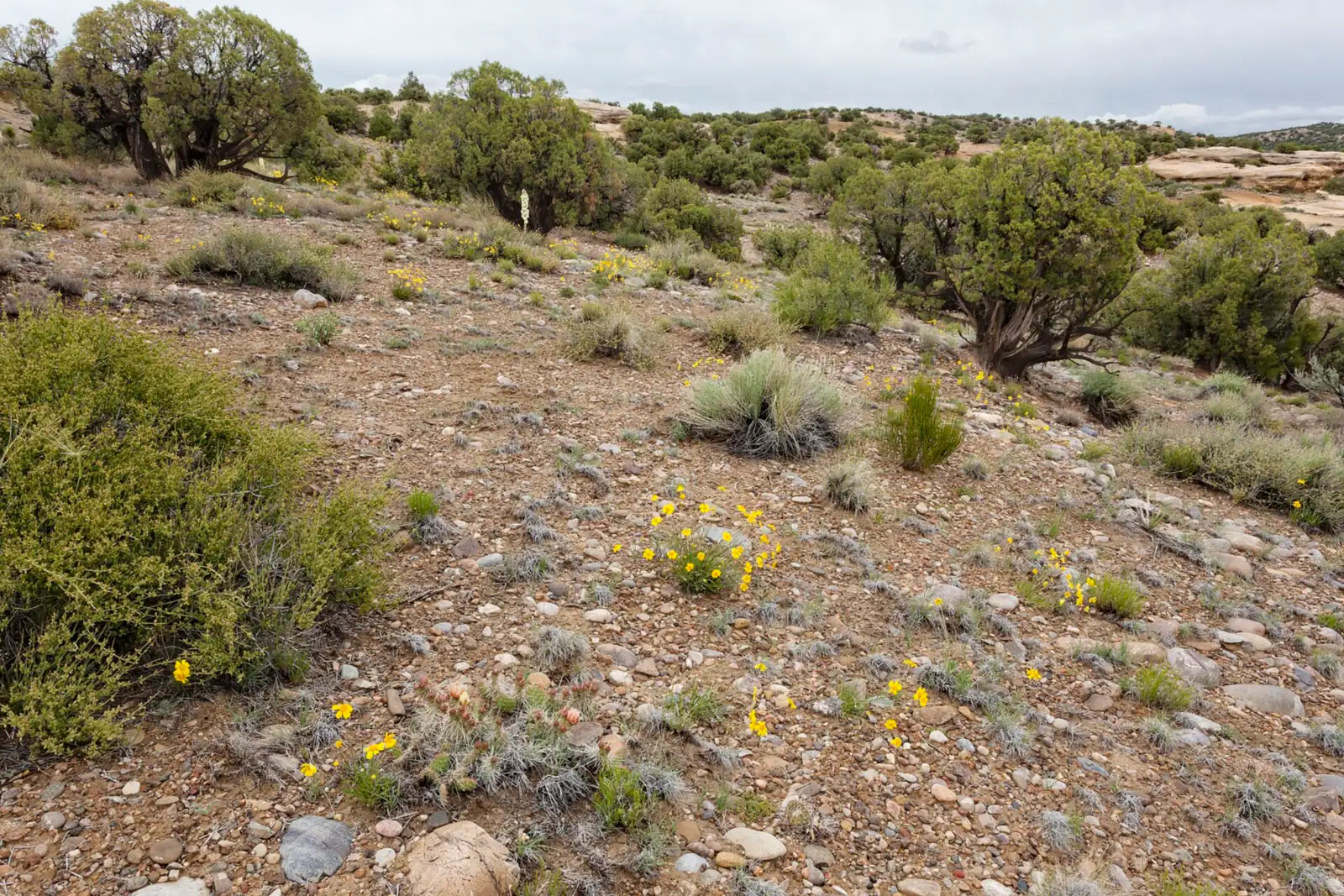
Chokecherry Canyon is the reason many Jeep owners know the name Farmington. The Farmington visitor bureau describes it as rock piles, boulders, slickrock, washes and technical climbs for every skill level. It sits in the open OHV area at the south end of Glade Run, reached from Piñon Hills Boulevard and Glade Road.
The canyon hosts the W.E. Rock Grand Nationals, a national rock crawling competition, and the visitor bureau also lists a yearly four-wheel-drive week and group trail rides. Dates change from year to year, so check the events calendar on the visitor bureau site.
The visitor bureau lists named Jeep trails here with difficulty ratings. Arch and Lower Rim are good for learning what you and your rig can do. Cobra and Upper Rim call for above-average skill. Gladiator and RJ's have rough obstacles, most with a bypass. Waterfall is one of the hardest: bring a winch or a tow strap, and know that rollovers can happen. A local club, the Chokecherry Crawlers, keeps an online map with ratings, and trails are still being marked, so get the newest map before you go.
The Dunes and Head Canyon
South of town on NM-371, the BLM's Dunes Off-Highway Vehicle Area (the visitor bureau calls it the Dunes Vehicle Recreation Area) is a smaller area of large sand dunes, steep and gentle hills and sandy arroyo bottoms. Years of riding have left a web of roads and trails. The BLM warns that it is technical terrain, with sand, rocks and steep curves, and that you will share it with riders going faster or slower than you.
There are no restrooms, no water, no BLM trails and no parking lot. You pull off and park at your own risk. Stay inside the boundaries, because private land and tribal land are right next to it. The area also has active gas wells: keep away from well pads, pipelines and equipment, and watch for heavy trucks.
Just south of the Dunes, also off NM-371, is the BLM's Head Canyon OHV Recreation Area. The BLM says it suits young riders and beginners, with a single-track loop to practice on before busier areas. The visitor bureau notes it is also used for motocross. It has no water or restrooms, and the way in can be hard to drive when wet.
Getting your machine there from the park
Plan to trailer. Most guests haul their side-by-sides, ATVs and dirt bikes on a trailer or in a toy hauler, then unload at the riding area. Ask the office about trailer and toy-hauler parking when you call.
New Mexico law is strict about paved roads. Dirt bikes may never be ridden on paved roads. ATVs and side-by-sides may use paved roads only where a local ordinance allows it, and a local ordinance can never open a US or state highway. The Dunes and Head Canyon sit on NM-371, a state highway, so trailer there.
Farmington does have a city ordinance for side-by-sides. The visitor bureau says side-by-sides with a steering wheel, roll cage and seat belts may use most city streets, but not Main Street, Broadway or La Plata Highway, and ATVs may not use city roads at all. The driver must be licensed and insured, and the machine needs its registration plus a paved-road decal. Unless your machine and paperwork meet every rule, the trailer is simpler.
Registration and permits for out-of-state riders
Every off-highway vehicle used on public land in New Mexico needs a current registration or a permit. The state wildlife department (the Game and Fish agency) runs the program.
- If your machine has a valid OHV registration from your home state, you do not need a New Mexico permit to ride public land. Bring proof.
- If your home state has no OHV registration or user fee, buy a New Mexico nonresident permit before you ride. The state sells a two-year permit and a shorter one, online, by phone or at a department office.
- Riding on paved roads where a local ordinance allows it is a separate paved-road decal. A home-state paved-road decal that meets New Mexico's rules counts.
- There are no fees to ride Glade Run, the Dunes or Head Canyon.
- Camping overnight at Glade Run needs a free BLM permit, and so do commercial trips, races and organized group rides.
Helmets and young riders
New Mexico has firm rules for riders under eighteen, and the state says a parent who allows a minor to break them faces the same penalty.
- Take a certified OHV safety course and carry the safety permit while riding. The state offers free hands-on classes for riders aged six and up, and approves a few online courses.
- Wear a securely fastened DOT or ECE approved helmet and eye protection.
- Carry no passengers, even on a machine built for two.
- Ride where an adult can see you, unless you are old enough and licensed (the state lists the exceptions).
- Children under six may not drive an ATV or side-by-side on public land.
- Any passenger must wear a helmet and eye protection.
Rules for every rider
- A spark arrester approved by the U.S. Forest Service is required on public land.
- No riding under the influence of alcohol or drugs.
- Do not chase or bother wildlife or livestock.
- After dark, you need a working headlight and taillight.
- At Glade Run and the Dunes: no firewood gathering, no fireworks or guns, and dogs on a short leash.
Stay on designated routes
Riding areas stay open when riders respect them. In the Glade Run limited zone, the BLM allows travel only on maintained oilfield roads, signed trails and two-tracks, and dry wash bottoms with no plants that are wider than your vehicle. In the open areas, stay inside the boundary signs. Parts of Glade Run can close for a short time during permitted events.
Tread Lightly, the national riding ethics group, sums it up in five habits: travel responsibly on designated routes, respect other trail users, educate yourself, avoid sensitive areas, and do your part. Colorado's Stay the Trail program puts it even shorter: keep your wheels where they belong. Pack out every bit of trash.
Seasons, heat and flash floods
Glade Run and the Dunes are open all year. Spring and fall are the most pleasant riding. Summer days are hot, the sand holds heat and there is little shade, so start early and be off the trail by midday. Winter can be good on dry, sunny days.
Rain changes everything here. The BLM warns that roads into Glade Run, the Dunes and Head Canyon can become impassable in bad weather. Summer storms can also flood dry washes with little warning. Stay out of washes when storms build, and never drive into moving water. The National Weather Service says about a foot of moving water can carry away most cars.
What to bring
- Registration or your nonresident permit, and the youth safety permit for riders under eighteen
- Helmets and eye protection for everyone
- More water than you think you need. There is none at the riding areas
- A full tank, plus spare fuel for a long day
- A tire repair kit, a tow strap, basic tools and a first aid kit
- A downloaded map: the BLM trail use map or the Chokecherry Crawlers map
- Sunscreen, a hat and a pop-up shade for the staging area
- A trash bag to pack everything out
Accessibility
The BLM says the OHV and bike trails at Glade Run have no accessible features. The Brown Springs campground has an accessible campsite, and the vault toilet parking area has accessible features. Head Canyon has none.
Day plans from the park
A morning at Glade Run
- Load the machine and fill up with gas in town.
- Unload at the Glade Run OHV Area lot off Glade Road.
- Ride the marked trails, or warm up in the skills lot.
- Back to camp by midday, then lunch and a rest.
A rock crawler's weekend
- Day one, an easier rated Jeep trail at Chokecherry Canyon to learn the rock.
- Day two, a harder trail with a friend's rig and a winch along.
- Evenings back at your site, with dinner in town.
- Rest day: hike the Bisti, where no vehicles are allowed past the trailhead.
Questions
Do I need a permit to ride at Glade Run or the Dunes?
There are no fees and no day permit. Your machine needs a New Mexico registration, a valid home-state OHV registration, or a New Mexico nonresident permit. Overnight camping at Glade Run needs a free BLM permit.
I am from out of state. Is my registration good here?
Yes, if it is a valid OHV registration from your home state. If your state has no OHV registration, buy a New Mexico nonresident permit online from the state wildlife department before you ride.
Can I ride from the park to the trails?
Plan to trailer. Dirt bikes may never use paved roads in New Mexico, ATVs may not use Farmington streets, and side-by-sides are barred from Main Street, Broadway, La Plata Highway and every state highway.
Can my kids ride?
Yes, with the state's youth rules. Riders under eighteen need a safety course and permit, a helmet and eye protection, and adult supervision, and they may not carry passengers. Children under six may not drive an ATV or side-by-side on public land.
Where can I park my toy hauler?
Ask the office about trailer and toy-hauler parking when you call.
Is there camping at Glade Run?
Yes. Brown Springs has a small campground with vault toilets but no water. Every overnight stay needs a free BLM permit, and there is a stay limit.
Sources
Hours, roads and rules change, so check these official pages before you go. Updated .
- Bureau of Land Management: Glade Run Recreation Area
- Bureau of Land Management: Dunes Off-Highway Vehicle Area
- Bureau of Land Management: Head Canyon OHV Recreation Area
- Farmington Convention and Visitors Bureau: Chokecherry Canyon and Glade Run
- Farmington Convention and Visitors Bureau: Off-Road Adventures
- Farmington Convention and Visitors Bureau: Off-Road Trails
- New Mexico Department of Wildlife, Ride NM: Laws and Rules
- New Mexico Department of Wildlife, Ride NM: Non-Residents
- New Mexico Department of Wildlife, Ride NM: Education and Safety
- Tread Lightly: The TREAD Principles
- Stay the Trail
- National Weather Service: Turn Around, Don't Drown